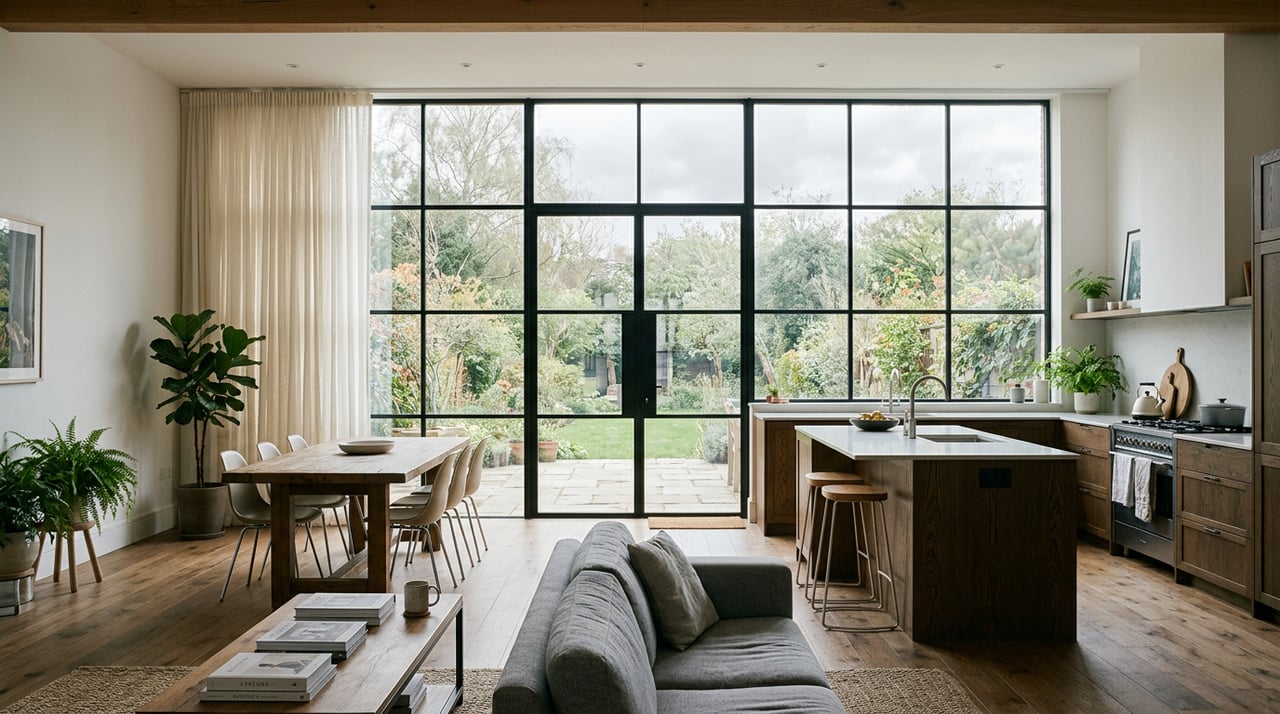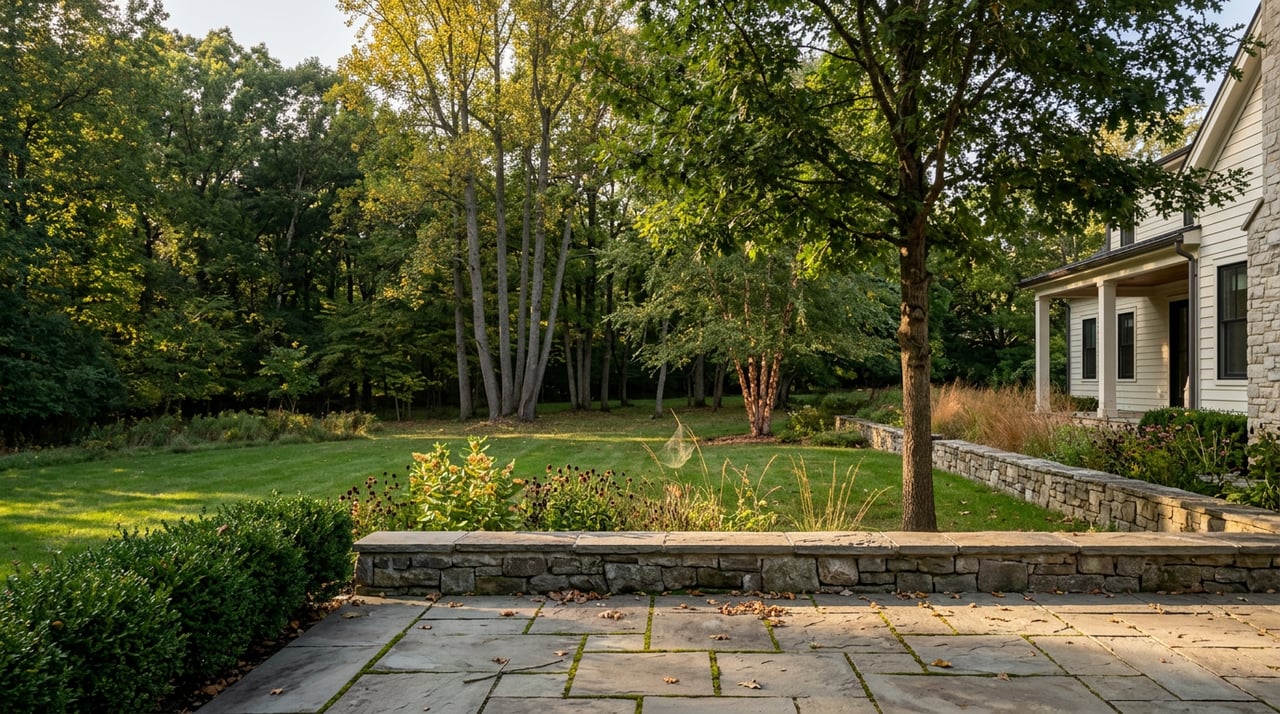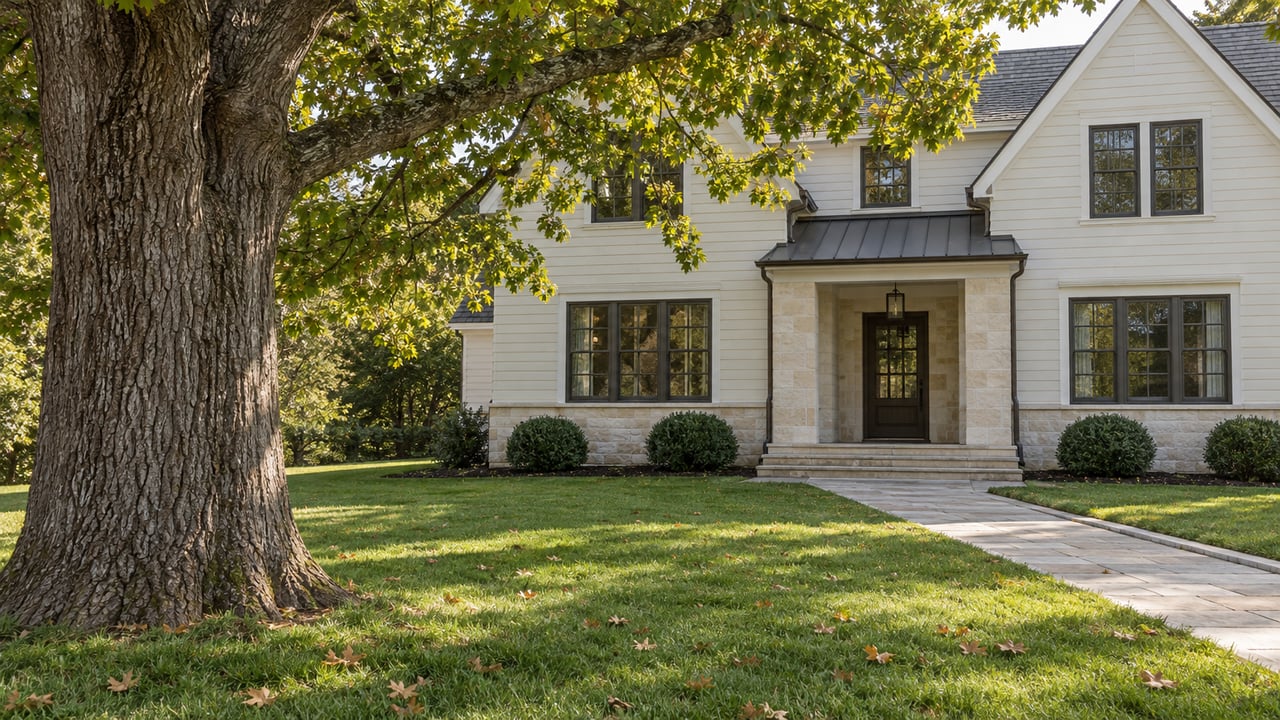
A homeowner on Delano Road in Buckhead wanted to renovate and needed a large front-yard tree gone to make the project work. Neighbors appealed the removal. Instead of losing the tree, the owner moved the driveway to the other side of the house and kept it standing. The home sold in one day, for more than the asking price.
That story circulated among Buckhead's tree advocates as proof that saving a tree can add value rather than subtract it. But it also shows something else, something that matters more now than it did when that sale closed. The delay wasn't caused by a fee. It was caused by a design negotiation that had to happen before anyone could get a permit at all. Atlanta's rewritten Tree Protection Ordinance, most of which took effect January 1, 2026, has made that kind of negotiation a formal, mandatory step for nearly every Buckhead property with a tree big enough to matter. Most of the coverage since the ordinance passed has focused on how much more it costs to remove a tree. For a Buckhead seller or buyer working against a closing date, the bigger question isn't the invoice. It's how long the process takes before you're allowed to start.
The Meeting Before the Permit
Since June 25, 2025, under a separate measure known as Ordinance #25-O-1341, anyone whose project might affect a tree has been required to schedule and complete an Arborist Meeting with the Office of Buildings' Arborist Plan Review staff before they can even submit a permit application. This isn't part of the fee schedule. It's a new front door. A renovation, an addition, a pool, or a teardown in Buckhead now runs through a conversation with city staff before the paperwork clock even starts.
Buckhead feels this more than most of Atlanta because of what the neighborhood actually is: predominantly R-1, R-2, and R-3 single-family zoning sitting under a canopy dense enough that almost no lot of any size is free of qualifying trees. Livable Buckhead has noted that the city has committed increased ordinance revenue toward expanding arborist and field staff, specifically to address what it calls long-standing review delays. That's a meaningful signal on its own. It means the city is acknowledging that its own review process has been a bottleneck, and that the fix is more staff, not a faster form. If you're under contract with a due diligence period built around a planned renovation, or a listing timeline that assumes a permit will move at the old pace, this is the detail worth building in slack for.
What the Fee Increase Actually Changed
The dollar figures did move, and they're worth knowing even if they're not the main story. Recompense, the fee charged when a tree is removed without a replacement planting, jumped from a flat $100 plus $30 per diameter inch to a flat $140 per diameter inch starting January 1, 2026. A single 20-inch tree removed with no planting credit now runs about $2,800 in recompense. Per-acre caps rose too: up to $35,000 per acre for R-1 and R-2 zoned lots, and up to $25,000 per acre for R-2A, R-3, and R-3A. The maximum penalty for illegal removal, assessed when the actual tree count on a disturbed site can't be determined, now tops out at $200,000 per acre.
Those numbers change the math for a developer clearing a lot for new construction. For a homeowner who wants one problem tree gone to build an addition, the fee is real money but rarely the deciding factor. A $2,800 recompense on a project already budgeted in six figures doesn't usually stop it. What stops it, or reshapes it the way it reshaped the Delano Road renovation, is whether the arborist's office decides the design could have been drawn differently to spare the tree in the first place.
A Standard With No Numbers
That's the part of the rewrite that deserves more attention in Buckhead than it's gotten. The ordinance directs the Arborist Division to determine whether a proposed project "cannot reasonably be designed or positioned to further increase tree protection" and whether the design minimizes impact "to the maximum extent practicable." Those are judgment calls, not measurements. The final version of the ordinance also grants the city authority to require site plan modifications, including reuse of existing developed areas like driveways, parking areas, and building footprints, before it will sign off on removing a tree standing in the way.
Charlie Sears of Land Plus Associates, who has tracked the rewrite closely, has pointed to that reuse provision as one of the least discussed pieces of the new rules. It means a homeowner's proposed footprint can be sent back for revision even when every individual tree removal would otherwise be permittable on its own. Attorney Craig Pendergrast has described the lack of fixed numeric standards as effectively an invitation to dispute, warning that the vagueness is setting up the kind of case-by-case fights that used to be rare exceptions and may now become routine. The Delano Road driveway move wasn't an outlier under the old rules. Under the new ones, it looks more like a preview of how these conversations will go for a much larger share of Buckhead renovation projects.
If You're Selling a Teardown Lot
For an owner marketing a property with real teardown potential, this changes the sequencing that makes sense before a listing goes live. Buckhead's tree advocates have suggested that sellers of undeveloped or tear-down-ready lots consider going through design and permitting first, effectively securing a "placeholder" plan that proves what can actually be built given the arborist's subjective standards. Without that step, a buyer is left guessing whether the design they have in mind will clear review, and that uncertainty tends to show up as a lower offer or a longer negotiation. A permitted design, even a preliminary one, removes the guesswork and gives a prospective buyer something concrete to evaluate instead of a hope.
The Disclosure Conversation
The other place this ordinance surfaces in a transaction is during due diligence, and it usually surprises the party who didn't expect it. A buyer's inspector or attorney will typically review permit history on a property, and a gap in that history, a tree that's clearly gone with no removal permit on file, can stall a deal at the worst possible moment. Sellers are generally expected to disclose known issues, and an unpermitted removal can fall into that category depending on the circumstances. Buyers who skip this step can end up owning a compliance problem that originated with a previous owner, since the city's Arborist Division does investigate suspected unpermitted removal regardless of who currently holds title.
There's a separate pathway for trees that are dead, dying, or hazardous, and it remains narrower, faster, and less costly than removal tied to a redevelopment project. If a tree poses an immediate hazard outside business hours, an owner can remove it but must document the condition with photographs and follow up with the city within five working days to formalize the permit. That pathway matters for the homeowner dealing with a storm-damaged limb over a driveway. It does not cover the more common scenario: a large, healthy tree that simply stands where a buyer wants a pool or an addition. One recent account described a couple who bought a home with a large backyard oak, began the permit process for a planned pool, and discovered the oak was classified as a heritage tree with a protected buffer running directly through the pool's footprint. The project didn't move forward. A pre-listing tree assessment, done before a property goes to market, gives a seller time to sort out exactly this kind of issue on their own terms rather than in the middle of a buyer's inspection period.
A Few Direct Questions
Does a dead tree still need a permit in Atlanta? Generally yes, unless it qualifies as an imminent hazard under the emergency provisions. The dead, dying, or hazardous pathway is still permit-based, but the process is narrower and faster than a standard removal tied to renovation or redevelopment.
What if a previous owner already removed a tree without a permit? That compliance question typically travels with the property, not the person. A current owner can be asked to account for the removal even if someone else did the work, which is why a pre-listing assessment or a permit history check before an offer is worth the time.
Do these rules work the same way just over the line in Sandy Springs or Brookhaven? No. Each jurisdiction sets its own thresholds. Atlanta requires a permit for private-property trees at 6 inches in diameter or larger, while a neighboring city like Sandy Springs uses a different threshold entirely for most trees, with separate rules for species like dogwood and redbud. A lot that looks similar on paper can sit under a completely different set of tree rules depending on which side of a boundary street it falls on.
If you're weighing a renovation, a teardown purchase, or a listing on a heavily wooded Buckhead lot, it's worth having the tree conversation before the design conversation, not after. Scott Thomas can help you sequence a pre-listing assessment or connect you with the right arborist before a permit timeline becomes a closing problem.