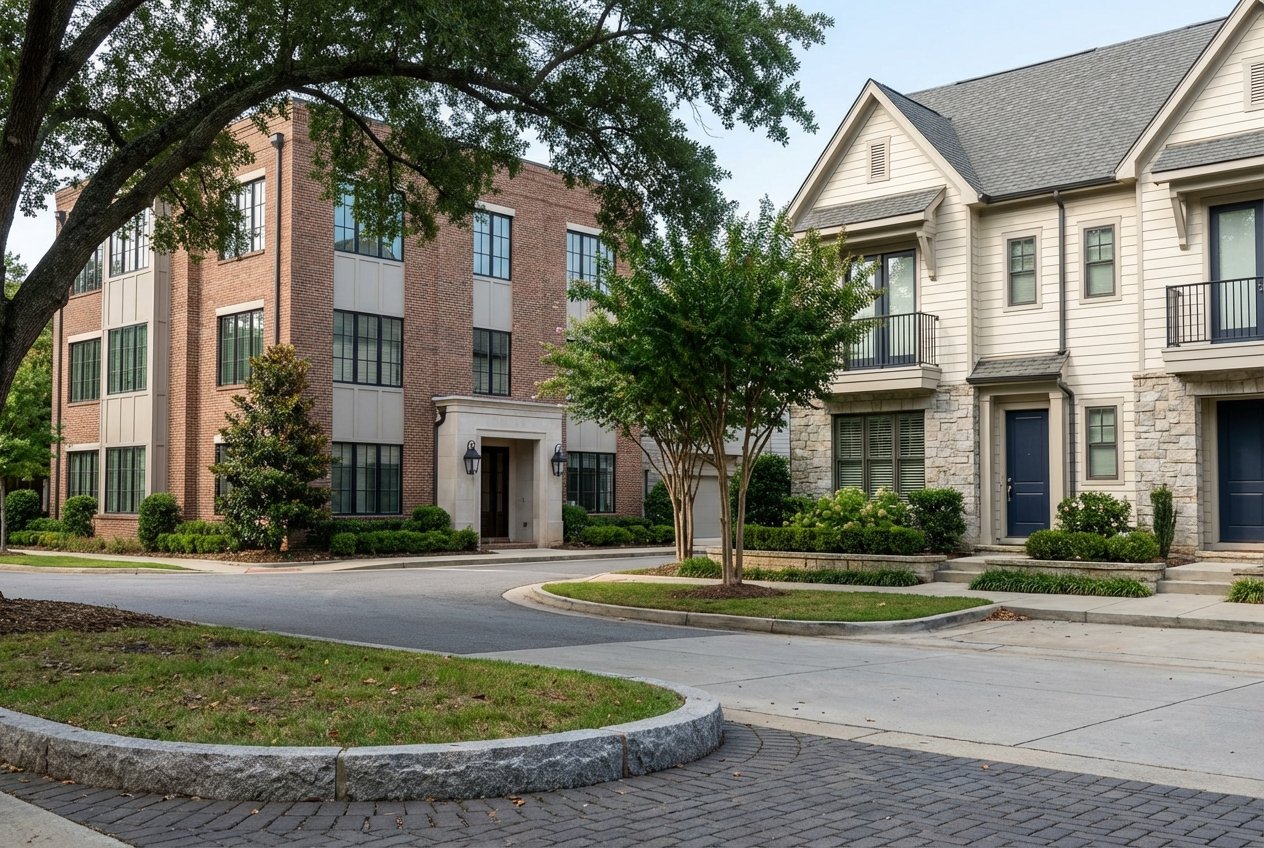
Trying to decide between a condo or a townhome in Sandy Springs? You are not alone. First‑time buyers want convenience and value, while many downsizers want comfort without the upkeep. This guide gives you clear, local insight so you can choose with confidence. You will see how each option fits your lifestyle, what it really costs, and the key checks to make before you buy. Let’s dive in.
Sandy Springs market snapshot
Recent citywide metrics show a median sale price around $565,000, with typical home values in the mid‑$600Ks. These figures include all housing types, so use them as context rather than a direct condo or townhome number. Local submarkets vary by building age, amenities, and proximity to Perimeter Center or City Springs. Use live MLS data for exact comps.
For orientation, entry‑level 1 to 2 bedroom condos often appear in the low $200Ks to $400Ks+. Larger and newer townhomes commonly range from the mid $300Ks into the $900Ks+. A representative entry‑level condo example is Park Towers Place in the Perimeter area, where some one‑bedroom listings have shown monthly dues that may include water and sewer. On the higher end, Townes at Chastain has recorded recent sales around the high $700Ks to $800Ks, with elevator‑ready floor plans and gated amenities. These examples highlight the spread between smaller condos and larger townhomes.
Condo living: what to expect
Many Sandy Springs condos cluster around Perimeter Center and City Springs. You will find high‑rise and mid‑rise towers, boutique mid‑rises, and garden‑style communities. Typical floor plans run 1 to 3 bedrooms, with many 1‑bed units around 700 to 950 square feet. Common amenities include a pool, fitness center, concierge or security, and covered or gated parking.
Condo associations often handle building systems and common utilities. That usually means higher monthly HOA dues than a townhome, but fewer exterior chores for you. If you want lock‑and‑leave convenience and on‑site amenities, a condo can be a strong fit.
Townhome living: what to expect
Sandy Springs townhomes often span 2 to 4 stories and live more like single‑family homes. Many include private garages, small yards or patios, and more interior space than a typical condo. Floor plans commonly range from about 1,600 to 2,800+ square feet with 2 to 4 bedrooms.
You will see townhome communities near Chastain Park, City Springs, and interior neighborhoods. Some newer communities are gated and elevator‑ready. If you want more space, dedicated parking, and fewer shared walls than a high‑rise, a townhome usually wins.
Costs, HOAs, and reserves
Condo associations generally cover the building exterior, structure, elevators, parking decks, security, and many shared utilities. Townhome associations more often maintain common grounds, private roads, gates, and amenities like a pool, with owners taking on more exterior responsibility. Because condo buildings have complex systems, condo dues tend to be higher on average.
A healthy HOA should have a current reserve study and a funded reserve account. Reserve studies identify major future costs like roofs, paving, and elevator work, along with annual funding targets. Underfunded reserves can lead to special assessments or HOA borrowing. Learn what a strong reserve plan looks like by reviewing guidance on reserve funding strategies.
Before you write an offer, request the association’s governing documents, current budget and recent financials, the latest reserve study and reserve balance, the master insurance certificate, and any notices of special assessments or litigation. Georgia associations operate under the Georgia Condominium Act or the Property Owners’ Association Act. These statutes affect lien rights and collection remedies, so it is smart to understand the basics and review a community’s documents. For background, see this overview of Georgia’s POAA and association powers.
Financing: condo checks that matter
Conventional lenders prefer “warrantable” condo projects. That usually means adequate reserves, appropriate insurance, no excessive investor concentration, and no disqualifying litigation. “Non‑warrantable” condos can be harder to finance and may require a larger down payment. Read a quick primer on warrantable vs. non‑warrantable condos.
If you plan to use FHA or VA financing, verify the project’s status early. FHA allows project approvals or single‑unit approvals in specific cases, while VA has a separate project approval process. Approvals can change, so ask your lender and agent to check the HUD and VA lists before you make an offer. Start with HUD’s condominium project approval guidance.
Commute, transit, and walkability
Sandy Springs residents report a mean travel time to work of about 26.6 minutes. Actual drive times to Downtown Atlanta or Buckhead vary widely by route and time of day, especially along GA‑400 and I‑285. Use the mean as context only. You can view the city’s profile on U.S. Census QuickFacts.
MARTA’s Red Line serves the area with stations at Medical Center, Dunwoody, Sandy Springs, and North Springs, plus several bus routes across Roswell Road and the Perimeter district. If you want a car‑light lifestyle, condos and townhomes near these stations can be a smart target. Check station details and park‑and‑ride options on the city’s public transportation page.
Walkability varies by submarket. City Springs and parts of the Perimeter corridor are more walkable, with restaurants, retail, and civic spaces close by. Many interior neighborhoods are more car dependent. If walking to dining and services matters to you, keep your search close to City Springs or Perimeter Center and verify a specific address’s walkability.
Parks and outdoor access
The Chattahoochee River corridor is a major lifestyle perk in Sandy Springs. Locals frequent Morgan Falls Overlook Park, Island Ford, and nearby trailheads for paddling, walking, and wildlife viewing. Review access rules and hours through the Chattahoochee River National Recreation Area.
Schools and boundaries
Sandy Springs addresses are served by Fulton County Schools. Riverwood International Charter School, which offers an International Baccalaureate program, is a noted high school option. You can review an overview of Riverwood on the Fulton County Schools site. Attendance boundaries can change, so confirm feeder patterns for any specific property before you buy.
Which fits your lifestyle
Use these quick filters to align your choice with how you live:
- If you value low exterior maintenance, on‑site amenities, and lock‑and‑leave living, a condo often fits best.
- If you want more space, a private garage, and a layout that lives like a house, a townhome usually wins.
- If quick access to MARTA or City Springs is key, target buildings near the Red Line stations and the Civic Center area.
- If you plan to downsize, look for elevator access, covered or assigned parking, and minimal stairs. For townhomes, consider a plan with a bedroom on the main level or elevator readiness.
Buyer checklist: condo vs. townhome
Model the full monthly cost
- Add mortgage, HOA dues, insurance, and property taxes. A lower‑priced condo with higher dues can match the monthly cost of a larger townhome with lower dues.
Vet the HOA’s financial health
- Request the current budget, 2 to 3 years of financials, the reserve study, and the current reserve balance. Ask about any special assessments or planned capital projects. Learn why reserves matter with this reserve funding guide.
Confirm financing feasibility
- For conventional loans, ask your lender if the project is warrantable. For FHA or VA, verify approval status early using HUD’s condo guidance.
Review documents before you commit
- Governing documents: Declaration, Bylaws, Rules and Regulations
- Insurance: master policy and deductibles
- Financials: current budget and recent statements
- Reserves: latest reserve study and balance
- Community status: special assessments, litigation, and owner delinquency rate
- Use rules: leasing policy, pet rules, parking assignments and guest parking
- Resale package: request the management‑prepared resale documents
Check accessibility and daily ease
- Elevators, assigned parking, inside laundry, minimal stairs, and proximity to entry are key for downsizers. In townhomes, explore elevator‑ready options if stairs are a concern.
Plan for resale and rentability
- Ask about leasing restrictions and investor concentration. Warrantability and FHA/VA status influence the future buyer pool and resale velocity.
Next steps
Choosing between a condo and a townhome is easier when you match lifestyle to layout, then validate the numbers with HOA and lender checks. If you want a clear, confident path forward, connect with Scott Thomas for a focused Sandy Springs search, building‑by‑building guidance, and a smooth offer‑to‑close plan.
FAQs
What is the main difference between a condo and a townhome in Sandy Springs?
- Condos emphasize low‑maintenance living and shared amenities, while townhomes offer more space and private garages with owners handling more exterior items through a lighter HOA.
How do HOA dues typically compare for condos vs. townhomes?
- Condo dues are often higher because they cover building systems, common utilities, and services like elevators and security; townhome dues usually focus on common areas and amenities.
How do I know if a condo is warrantable for conventional financing?
- Ask your lender to review the project’s reserves, insurance, investor concentration, and litigation status; see this overview of warrantable vs. non‑warrantable condos.
Can I use FHA or VA loans for Sandy Springs condos?
- Yes, if the project meets program rules; check current approval status early using HUD’s condominium guidance and consult your lender about single‑unit approvals where allowed.
What should I request from the HOA before making an offer?
- Ask for governing documents, budgets and financials, the reserve study and balance, the master insurance certificate, and disclosure of any special assessments, litigation, delinquency rates, leasing rules, and parking policies; Georgia’s POAA overview explains key association powers.
How walkable is Sandy Springs if I want a car‑light lifestyle?
- City Springs and parts of Perimeter Center offer the most walkability and MARTA access; many interior neighborhoods are car dependent, so verify address‑level walk scores and station proximity on the city’s public transportation page.
What is the typical commute from Sandy Springs to Atlanta?
- The city’s mean travel time is about 26.6 minutes, but actual commutes vary by route and time; see U.S. Census QuickFacts for context and test your route at rush hour before you buy.