Are mortgage rates the real driver behind what homes sell for in 30312? If you’re buying or selling around Grant Park, Summerhill, or the BeltLine, rates can change what buyers can afford and how sellers should price. You want clear, local guidance that translates rate moves into real dollars and timing. This guide breaks down the mechanics, shows simple mortgage math you can run yourself, and shares practical tactics to use right now in Fulton. Let’s dive in.
How rates move prices
Mortgage rates shape what buyers can qualify for and how confident they feel when making offers. When rates rise, monthly payments go up for the same loan amount. That reduces purchasing power and can shrink the buyer pool at a given list price. When rates fall, the opposite happens.
Lenders also use your contract rate to calculate debt-to-income. A higher rate can push the same borrower outside the qualifying range, even if income and credit are unchanged. That tightens demand and slows sales velocity.
Rates affect sellers too. Owners with low fixed loans may hesitate to list because their replacement payment could be higher. That can reduce new listings, but it does not always lift prices because buyer demand is also weaker. In higher-rate periods, sellers often offer concessions or adjust price to meet the market.
What to watch in 30312
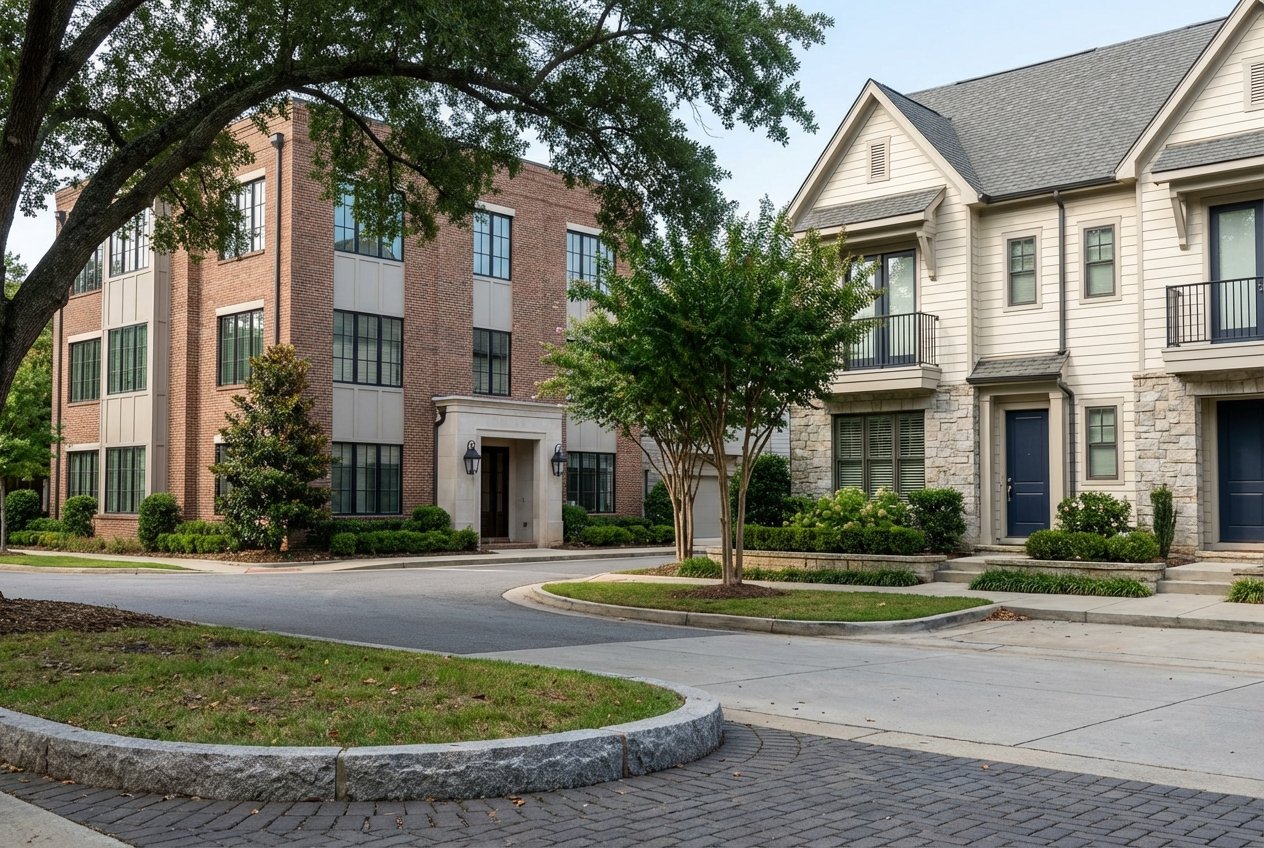
ZIP 30312 includes a mix of condos, townhomes, and single-family homes near downtown and along the BeltLine. Different property types attract different buyer profiles, so rate sensitivity varies. Entry price points tend to be more rate-sensitive because a small payment change is a larger share of income. Upper segments may see more cash or jumbo financing, which can cushion rate shocks.
Local pricing always reflects more than rates. Employment, migration, inventory, and new construction all matter. Price changes often lag rate moves by weeks or months because listings, appraisals, and escrows take time to cycle through.
Easy mortgage math you can use
Here are the standard 30-year fixed formulas for principal and interest (P&I):
- Monthly payment: M = L × i / (1 − (1 + i)^(−N))
- L = loan amount, i = monthly rate (annual rate/12), N = 360
- Maximum loan for a target payment: L = M × (1 − (1 + i)^(−N)) / i
- Purchase price with down payment share d: Price = L / (1 − d)
Purchasing power example
Assume you target P&I of $2,000 per month with 20% down on a 30-year fixed. Here is how your max price changes with rate:
- At 4.00%: max loan ≈ $418,920 → max price ≈ $523,650
- At 6.00%: max loan ≈ $333,560 → max price ≈ $416,950
- At 7.00%: max loan ≈ $300,600 → max price ≈ $375,750
Moving from 4% to 6% reduces purchasing power by roughly 20%. From 4% to 7% the drop is roughly 28%. A quick rule of thumb: every 1 percentage point increase in rate often cuts purchasing power by about 7–12%, depending on your starting rate and down payment.
Payment example at a fixed price
For a $450,000 home with 20% down (loan = $360,000):
- At 4%: P&I ≈ $1,718/month
- At 6%: P&I ≈ $2,157/month (up $439, about +26%)
- At 7%: P&I ≈ $2,395/month (up $677, about +39%)
These examples help you set a confident budget or price strategy before you list or write an offer.
How rate swings show up locally
When rates rise noticeably:
- Demand contracts. Expect longer days on market and more price reductions.
- Negotiation shifts. Buyers ask for closing-cost credits, temporary buydowns, or longer timelines.
- Price discovery resets. Listings based on last year’s low-rate comps may need adjustment to meet today’s buyer pool.
When rates fall materially:
- Demand expands. More buyers qualify at higher nominal prices.
- Competition increases. Multiple-offer scenarios are more frequent, especially at popular price points and well-presented homes.
- Inventory can tighten. Owners may refinance instead of listing, making strong marketing and pricing even more important for sellers seeking top-of-market results.
Quick guide: 1-point rate move
- Purchasing power impact: often 7–12% in either direction.
- For buyers: a 1-point increase may push a target home out of budget unless you adjust down payment or price.
- For sellers: plan for potential concessions or price strategy changes if rates rise during your listing period.
Buyer strategies in 30312
- Get pre-approved and lock your rate window early. Confirm your budget at current and alternative rates so you can move quickly.
- Adjust the levers. A larger down payment can restore purchasing power. Consider an ARM only after you understand reset risk and your time horizon.
- Use concessions strategically. Ask for seller-paid points or a temporary buydown if the list price is firm. Compare the cost of points to the monthly savings.
- Focus on value and fit. Target homes with strong fundamentals: condition, layout, and location that aligns with your lifestyle and commute.
Seller strategies in 30312
- Price to today’s demand. If rates are higher, consider listing slightly below recent comps to capture more showings and create urgency.
- Offer targeted incentives. Credits toward closing costs or a 2-1 buydown can widen your buyer pool without a large headline price cut.
- Showcase presentation. Professional marketing, compelling visuals, and broad digital reach help preserve pricing power even when rates are volatile.
- Run scenarios. Model net proceeds at current rates and at shifts of ±1 percentage point so you know exactly how to respond if the market changes mid-listing.
Build a scenario plan
Whether you are buying or selling, create three quick views: current rate, rates 1 point higher, and rates 1 point lower. Use the formulas above, your actual budget or target price, and your down payment. If you are selling, pair that with days-on-market expectations and a concession plan.
If you want help running the numbers for your specific property or search area in Fulton, get a customized scenario plan and on-the-ground strategy discussion with Scott Thomas. You will walk away with a clear pricing or bidding plan that reflects today’s rates and your goals.
FAQs
How do mortgage rates affect 30312 home prices?
- Rates change buyer purchasing power and qualification. Higher rates shrink the eligible buyer pool at a given price, which can increase days on market and concessions; lower rates generally expand demand and support higher prices.
What happens to a $450,000 home payment if rates rise?
- With 20% down, principal-and-interest is about $1,718 at 4% and about $2,157 at 6%, a jump of roughly $439 per month, based on standard 30-year fixed calculations.
Should I wait to sell in Fulton until rates drop?
- It depends on your timeline and goals. Higher rates can reduce buyer competition, but they can also reduce competing listings. Model your net proceeds under multiple rate scenarios to decide.
Can sellers in Atlanta offer a lower effective rate?
- Yes. Sellers can contribute to points or a temporary buydown, which lowers the buyer’s initial payment. Always compare the cost to the expected increase in buyer interest and disclose terms clearly.
Do rate changes hit entry-level or luxury homes harder?
- Entry-level segments often feel rate changes more because monthly shifts are a larger share of income and loan-to-value is higher. Upper segments may include more cash or jumbo financing and can be less immediately rate-sensitive.