You love Midtown’s energy, but late-night music, sirens, and bright lights can wear you down. If you’re buying, selling, or settling in, you want comfort without giving up location. In this guide, you’ll learn how to reduce noise and glare at home, what Atlanta allows, and which upgrades deliver real results. Let’s dive in.
Midtown’s biggest noise and light sources
Midtown’s density puts bedrooms close to busy streets and entertainment. Large events in Piedmont Park and commercial corridors with patios and amplified music can raise evening levels and spark complaints, as noted by local neighborhood groups and the Midtown Alliance’s event updates and guidance (community guidance and event info, licensing and permit committees). Continuous traffic on Peachtree and 10th Street, the Connector, and the BeltLine area adds a steady backdrop of sound that is harder to block at lower frequencies (FHWA overview of traffic noise). Construction and emergency sirens round out the picture, especially during early mornings and late nights.
What Atlanta allows and how to report it
Atlanta’s noise rules live in Chapter 74 and include a process for temporary variances that events and some construction use for short periods (City ordinance and variance overview). For non-emergency complaints, use ATL311 online, the app, or by phone; urgent public safety issues go to APD/911. Neighborhood associations often suggest documenting patterns and including council staff or license committees for ongoing commercial sources (neighborhood engagement tips). Enforcement can be uneven during permitted events, so early input during permit reviews tends to be more effective than one-off complaints during the event.
How loud is too loud at home
For healthy sleep, indoor bedroom sound should be about 30 dB LAeq, with single-event peaks around 45 dB LAFmax, according to international guidelines often cited by public health agencies (WHO sleep guidance summary). Outdoor residential daytime comfort is commonly referenced near 55 dB LAeq. Close to busy arterials, outdoor levels often fall in the 65–80 dB(A) range, which requires strong window and façade performance to hit sleep-friendly interiors. A 10 dB drop is typically perceived as about half as loud (FHWA traffic noise basics).
Proven ways to quiet your home
Windows and sealing
Windows are usually the weakest link. Typical double-pane units have an STC around 33–35, while acoustic glazing can reach the 40s, yielding a sizable perceived drop in loudness (STC basics). Interior acoustic inserts can add 10–20 dB of reduction depending on the setup and are less disruptive for condos or historic windows (acoustic insert performance). Tight weatherstripping and caulked perimeters help close gaps that leak sound. Aim bedroom upgrades toward the WHO targets by combining higher-STC glass and excellent seals.
Walls, floors, and ceilings
Adding mass and decoupling inside a room works well for speech and mid to high frequencies. Options include resilient channels, added drywall layers, insulated cavities, and better sealing around penetrations. Penthouse or top-floor units can also benefit from double-layered ceilings and resilient mounts for rooftop mechanicals.
HVAC and ventilation strategy
To keep noise down, you often need windows closed. Make sure you have quiet, effective HVAC or ventilation so comfort doesn’t depend on open windows. If you rely on through-wall units, consider quieter models or lined ducts to limit equipment noise.
Layout and furnishings
Place bedrooms on the quieter side of the building when possible. Heavy curtains, bookshelves, rugs, and soft furnishings reduce reflections and tame higher frequencies, though they do less for the deep rumble of traffic. White-noise or sound masking can smooth out intermittent sounds but will not eliminate sharp peaks.
Exterior and balcony tweaks
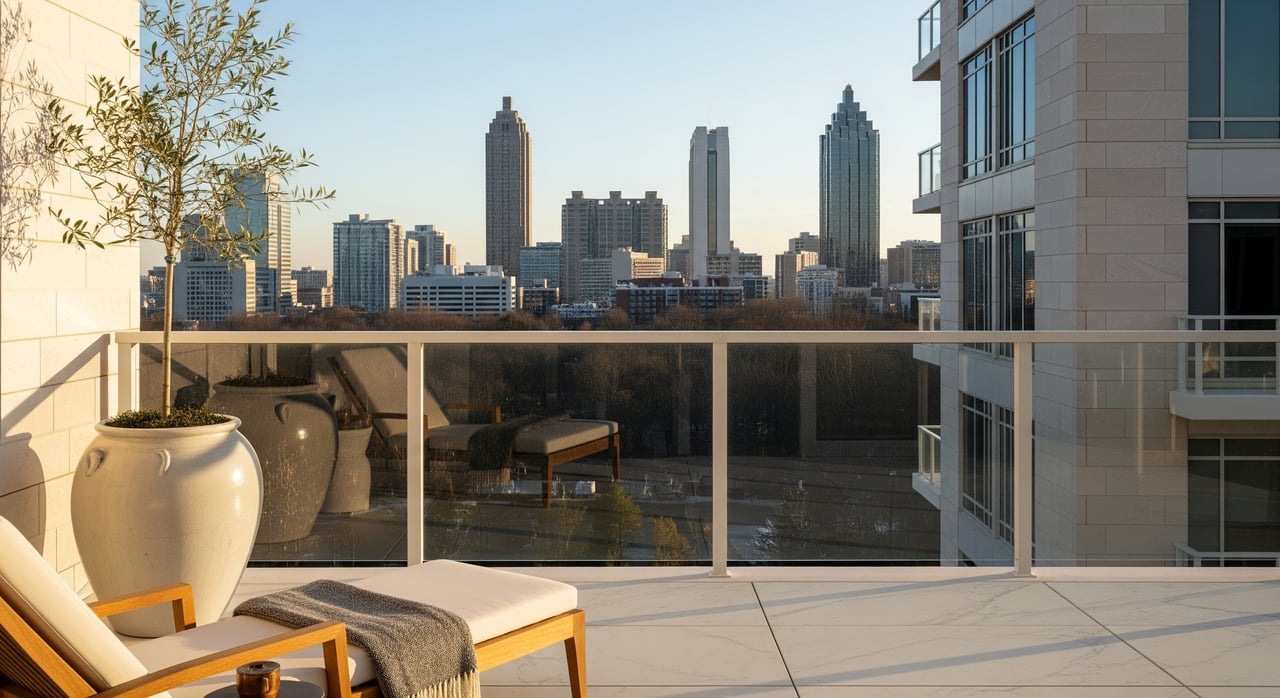
Plants and fences add privacy and modest sound softening, but they cannot replace good windows for traffic or amplified music. On balconies, partial shielding or baffles can reduce direct sound and wind-driven noise at seating areas.
Smarter lighting, less glare
Light trespass and glare can be as disruptive as noise. Use fully shielded fixtures, keep light aimed down, and choose warm LEDs at 2700–3000K to reduce blue-rich content that affects night skies and sleep. Add timers, dimming schedules, or motion sensors so bright lights are not on all night. These are standard best practices in lighting design and dark-sky guidance (shielding and color temperature guidance).
What works in Midtown conditions
If your outdoor level near a busy corridor is about 75 dB(A), a standard double-pane window may only bring interiors to the low-to-mid 40s dB, which can still disturb sleep. Upgrading to high-STC glazing or adding acoustic inserts, plus sealing and dependable HVAC, often yields 10–20 dB more reduction. That change can be the difference between waking frequently and sleeping through most events (FHWA traffic noise basics, acoustic insert performance).
Buyer checklist for Midtown tours
- Ask about typical nighttime noise and any history of complaints or documentation.
- Note orientation: Is the bedroom facing Peachtree, near Piedmont Park, or close to nightlife or event zones?
- Confirm window type and age: single-pane, double-pane low-E, laminated acoustic glass, or interior storm inserts.
- Verify HVAC performance so you can keep windows closed when needed.
- Ask the HOA or building manager about logged noise or lighting complaints and any policies for exterior lighting or outdoor music.
- Visit at key times: rush hours, late evenings, and weekend days if festivals or nightlife are relevant.
- Spend a few minutes with windows closed and open to compare. Listen for rattle or low-frequency hums that suggest weak seals.
Already live here? Start with these steps
- Document issues by date, time, duration, and likely source, with brief audio or video if possible.
- Try a courteous neighbor or management approach first for patio noise or lighting and request shielded fixtures or earlier quiet hours.
- For persistent commercial sources, involve neighborhood groups and license or permit committees, especially before renewals or events (neighborhood committees).
- File formal complaints via ATL311 for code issues or APD/911 for emergencies; variances and after-hours work run through the City’s published channels (City ordinance and variance overview).
- Implement in-home fixes: seal gaps, add acoustic inserts, consider bedroom glazing upgrades, and use sound masking for short-term relief (acoustic insert performance).
Typical costs and value
- Acoustic interior window inserts: about $300–$800+ per window with many test results showing 8–20 dB reductions depending on conditions (acoustic insert performance).
- Replacement acoustic or upgraded insulated windows: several hundred to over $1,000 per window, plus installation.
- Interior room upgrades with added drywall and decoupling: several hundred to several thousand dollars depending on scope.
- Lighting adjustments with shielded fixtures, warm LEDs, and timers: roughly $50–$300 per fixture.
Find comfort without leaving Midtown
You can enjoy Midtown’s location and still sleep well with the right plan. Target windows first, back them up with HVAC and simple layout choices, and use neighborhood channels when sources are ongoing. If you want help finding a unit with the right orientation and upgrades, or pricing improvements before you list, connect with Scott Thomas for local, data-informed guidance.
FAQs
How can I sleep during Midtown festivals?
- Combine high-performance bedroom glazing or interior acoustic inserts with tight seals and reliable HVAC to keep windows closed; some low-frequency energy may remain near stages.
Who handles loud patio music from bars in Atlanta?
- Start with building management or the venue, then loop in neighborhood license and permit committees and file ATL311 complaints; documented patterns improve enforcement chances.
Do trees reduce Midtown traffic noise?
- Vegetation helps with privacy and higher-frequency softenings but does not replace glazing and façade upgrades for traffic or amplified sound.
What outdoor lighting reduces glare and sleep disruption?
- Use fully shielded fixtures, warm 2700–3000K LEDs, and timers or dimming late at night to cut trespass and blue-rich light per dark-sky best practices.